Overwatering vs Underwatering: How to Tell the Difference
Learn how to distinguish overwatering from underwatering using soil, leaf and root clues—and what to do next without making the problem worse.
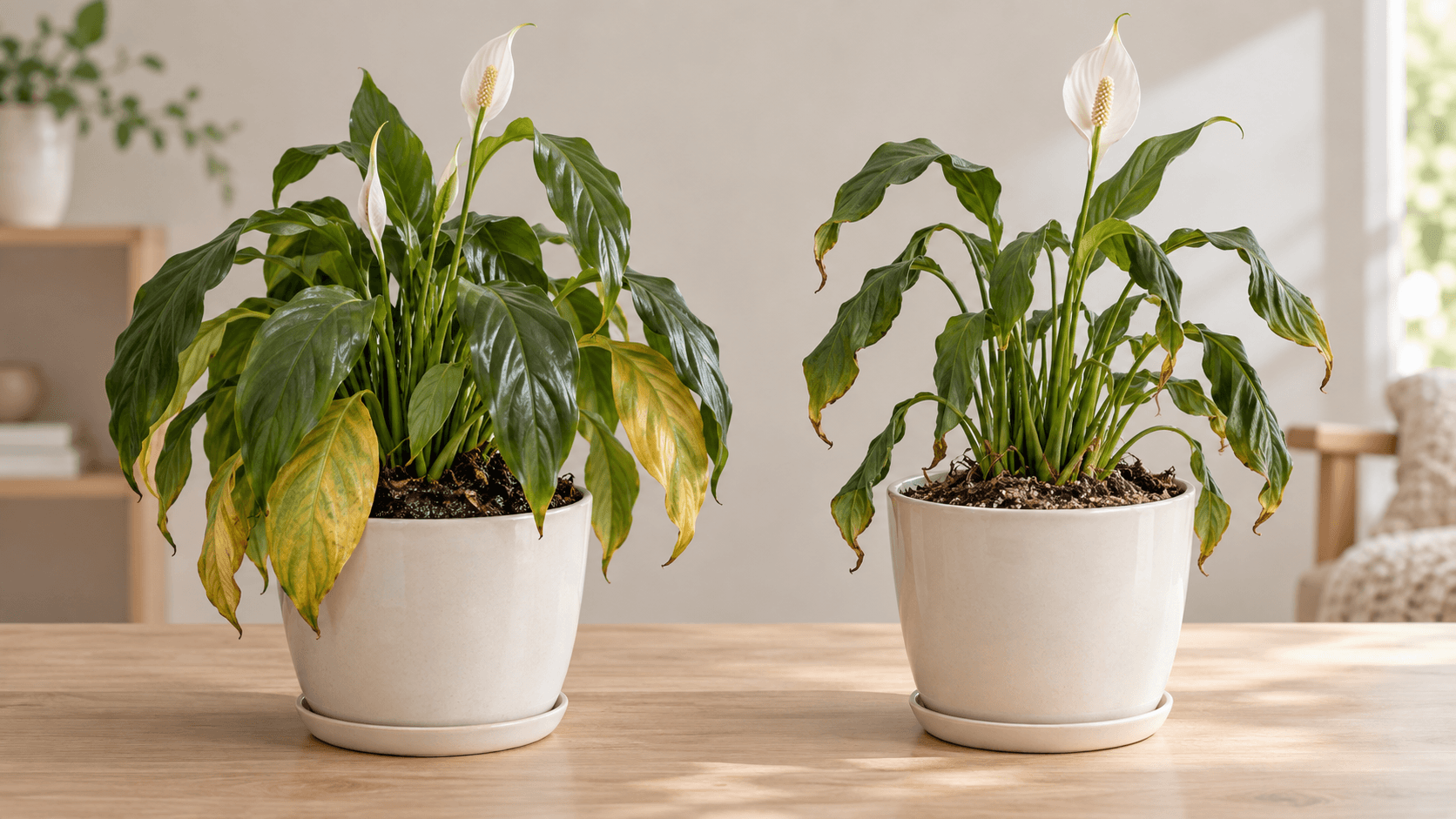
Overwatered and underwatered plants can look surprisingly similar. Both may wilt, lose leaves and stop growing. The fastest way to tell the difference is not to judge the leaves alone: check the soil moisture, the weight of the pot, how long conditions have lasted and, when necessary, the roots.
An underwatered plant usually sits in dry soil and may have thin, crisp or curled leaves. An overwatered plant often sits in wet soil and may develop yellow lower leaves, soft tissue, a stale smell or dark damaged roots. Those are patterns, not guarantees, so gather several clues before reaching for the watering can.
Why both problems can cause wilting
Wilting means the leaves have lost the internal water pressure that keeps them firm. Dry roots cannot supply enough water, so underwatered leaves collapse. But roots damaged in persistently wet, poorly aerated soil may also fail to move water effectively. The plant can wilt even though the pot is wet.
That is why “wilting equals thirsty” is dangerous. University of Georgia Extension resources warn that people often see yellowing and wilt, assume drought and add more water—even when excess moisture and poor drainage are the underlying issue.
Always check the root zone before treating the symptom.
Signs of underwatering
Look for a cluster of dry-condition clues:
- The potting mix feels dry below the surface.
- The pot is noticeably lighter than after watering.
- Soil may pull slightly away from the pot wall.
- Leaves look limp, thin or folded rather than swollen.
- Tips and edges may become brown and crisp.
- Older and newer leaves can both droop.
- The plant may recover visibly after a thorough, appropriate watering.
Severe or repeated drought can cause leaf drop, stalled growth and dry root damage. Very dry peat-based mix can become difficult to rewet; water may run down the side and out of the drainage hole without moistening the root ball.
Signs of overwatering
Look for wet-condition clues:
- The soil remains wet or heavy for many days.
- Lower leaves yellow while the mix is still moist.
- Leaves or stems feel soft, swollen or translucent.
- New growth may be weak or stunted.
- The pot or soil has a sour, stagnant smell.
- Fungus gnats gather around persistently moist organic mix.
- Roots appear dark, soft or easy to strip rather than firm and pale.
Advanced root problems can cause widespread wilt, leaf loss and stem collapse. Do not wait for every symptom. A wet pot that is not drying, combined with yellowing and loss of vigor, is enough reason to investigate.
The most reliable checks
Check below the surface
The top centimetre can dry while the center remains wet. Insert a clean finger or wooden skewer deeper into the mix, avoiding major roots. A skewer that emerges dark and damp suggests moisture remains. For large pots, sample more than one location.
Lift the pot
Learn the difference between the pot just after watering and near the end of its normal dry-down. Weight is an excellent second opinion. This works best with smaller containers and consistent soil.
Read the drainage behavior
When you water, does excess drain freely? Does it rush down one channel while the center stays dry? Does the saucer remain full? Drainage behavior can reveal compacted or water-repellent mix.
Review the timeline
Ask what happened before the symptoms appeared. Did the room become cooler? Was the plant moved to lower light? Did someone else water it? Was it repotted into a larger container? A timeline prevents you from reacting to one ambiguous leaf.
Inspect roots when the evidence points there
If the plant continues to decline in wet soil, slide it out gently. Healthy roots are generally firm; color varies by species and mix. Damaged roots may be dark, mushy, hollow or foul-smelling. Avoid unnecessary disturbance when the plant is only mildly stressed.
A side-by-side diagnostic guide
| Clue | More consistent with underwatering | More consistent with overwatering | | --- | --- | --- | | Soil | Dry through much of the root zone | Wet for an unusually long time | | Pot weight | Light | Heavy | | Leaf texture | Thin, curled or crisp | Soft, yellowing or swollen | | Soil edge | May shrink from the pot | May stay dark and compact | | Smell | Dry or neutral | Sour or stagnant | | Roots | Dry, brittle or shriveled | Dark, soft or decaying | | Response to water | Often improves after proper watering | Often worsens with more water |
Use the table as a pattern matcher, not a diagnosis from one row.
What to do for an underwatered plant
Rehydrate the root ball evenly
Water slowly and thoroughly until the mix is evenly moist and excess drains. If water immediately runs around a shrunken root ball, apply it in several passes a few minutes apart. For a pot with drainage, temporary bottom soaking can help a water-repellent mix absorb moisture, but remove the pot and let it drain fully afterward.
Restore, do not flood
One complete watering is better than repeated small splashes that wet only the surface. Do not leave the pot standing in water unless the plant and method specifically require it.
Reduce stress while it recovers
Keep the plant in suitable indirect light and away from hot drafts. Do not fertilize a severely dry plant immediately. Remove only fully dead material; partly green leaves can still contribute.
Prevent the next extreme
Review why it dried too far. The pot may be too small, the mix may repel water, the plant may receive intense light or the routine may be unrealistic. A reservoir or sensor can help if the underlying setup is sound.
What to do for an overwatered plant
Stop adding water
Do not water again because the plant is wilted. Empty the saucer and allow drainage. Move it out of a decorative cachepot if water is trapped inside.
Improve conditions for drying
Provide appropriate light, normal room warmth and gentle airflow. Do not put a stressed shade plant in harsh direct sun to “dry it faster.” The aim is to restore a healthy environment, not create a second stress.
Inspect the container and mix
Confirm that drainage holes are open. If the medium is dense, compacted or sour-smelling, repotting may be necessary. Choose a clean container and a suitable airy mix.
Remove damaged roots carefully
If roots are clearly soft and decayed, trim damaged tissue with clean tools. Preserve firm roots. Repot into fresh medium and use a pot proportionate to the remaining root system.
Resume watering conservatively
Allow the mix to reach the appropriate dry point before watering again. Recovery may be slow because a plant with fewer healthy roots uses less water.
Other problems that look like watering stress
Low light
In low light, growth slows and soil dries more slowly. Yellowing may be blamed on water even though the deeper issue is that the plant cannot use moisture at its former rate.
Excess heat or dry air
Hot glass, radiators and vents can produce crisp edges and rapid wilt. The soil may still contain moisture while leaves lose water quickly.
Root-bound conditions
A dense root mass can leave little soil to store water, causing rapid drying. It can also make watering uneven. Inspect the roots if the pot suddenly dries much faster than before.
Pests
Spider mites, thrips and other pests can cause droop, discoloration and leaf damage. Check leaf undersides and new growth rather than assuming every decline is moisture-related.
Fertilizer or mineral buildup
Excess salts can damage root tips and create brown edges. Review fertilizer history and water quality, especially if moisture appears normal.
Normal leaf aging
One older lower leaf turning yellow may be normal. A pattern spreading through the plant, especially alongside abnormal soil moisture, deserves attention.
How moisture sensors help
A sensor gives you a consistent view inside the pot and can reveal whether the root zone is drying over hours and days. That trend is more useful than a single reading. It can also show that a plant used water faster after a bright week or stayed wet longer after being moved.
A sensor-controlled smart planter can go further by linking the trend to a plant profile and watering only after a lower threshold is reached. Chlora One is designed to check soil moisture, apply the selected plant’s rules and deliver a measured amount from its reservoir when needed. The app records care status and watering history and can alert for dry soil, low water or offline status.
Sensors have limits. An air pocket, compact clump, salt buildup or poor position can distort a reading. Compare the number with pot weight, leaf condition and timestamps. If the reading says “dry” immediately after water was delivered, investigate before manually adding more.
Preventing both extremes
Stop watering by weekday
Check the soil and plant instead. Seasonal conditions change too much for a rigid schedule.
Use the right pot size
An oversized pot can stay wet around a small root system. A very small pot may dry before your routine can keep up.
Prioritize drainage and structure
Use a mix appropriate to the plant. Empty saucers after conventional watering and keep drainage openings clear.
Keep the plant in suitable light
Healthy growth and water use depend on light. Match the species to the room rather than trying to solve poor placement through watering.
Track what happens
Record watering dates, note changes in position and watch drying time. An app can make this easier, but a simple notebook works.
Make changes one at a time
If you move the plant, change the soil and alter watering simultaneously, you will not know which adjustment helped. Stabilize the system and observe.
A calm decision sequence
When a plant wilts, use this order:
- Touch or measure the soil below the surface.
- Lift the pot and check its weight.
- Look for yellow, crisp, soft or translucent tissue.
- Check drainage, recent watering and environmental changes.
- Water only if the root zone is actually dry.
- Inspect roots if wet-soil decline continues.
This sequence prevents the most common reflex: adding water to a plant whose roots are already struggling in wet soil.
Frequently asked questions
Can an overwatered plant look dry
Yes. Damaged roots may be unable to supply water to the leaves, causing wilt even in wet soil. Check the medium and roots before watering again.
Are yellow leaves caused by too much water
They can be, especially when lower leaves yellow while the soil stays wet. Yellowing can also result from low light, nutrition, pests, temperature stress or normal aging.
How long should soil stay wet
There is no universal number. Pot size, plant, mix, light and season all matter. The warning sign is a meaningful change from the plant’s normal pattern or soil that remains saturated without healthy water use.
Should I mist an underwatered plant
Misting does not rehydrate a dry root ball. Water the soil appropriately and address the environment. Humidity support is separate from root-zone watering.
Can a moisture meter be wrong
Yes. Contact, placement, soil composition and salts can affect readings. Use trends and physical checks, and reposition or clean the sensor according to its instructions if data seems implausible.
Sources and further reading
- University of Georgia Extension, Overwatering can lead to problems: https://site.extension.uga.edu/fultonag/2020/06/overwatering-can-lead-to-problems/
- University of Georgia Extension, Overwatering signs and symptoms: https://site.extension.uga.edu/camdenanr/2021/06/overwatering-the-signs-and-symptoms/
- University of Minnesota Extension, Spring houseplant care: https://extension.umn.edu/garden-and-home/yard-and-garden/gardening-in-minnesota/houseplants/spring-houseplant-care
- University of Minnesota Extension, Fungus gnats: https://apps.extension.umn.edu/garden/diagnose/insect/indoor/flies/small/fungus-gnats.html
- Chlora One user manual and product source material