How Does an Automatic Watering Flower Pot Work?
See how automatic watering flower pots use reservoirs, moisture sensing and controlled water delivery—and how they differ from passive self-watering pots.
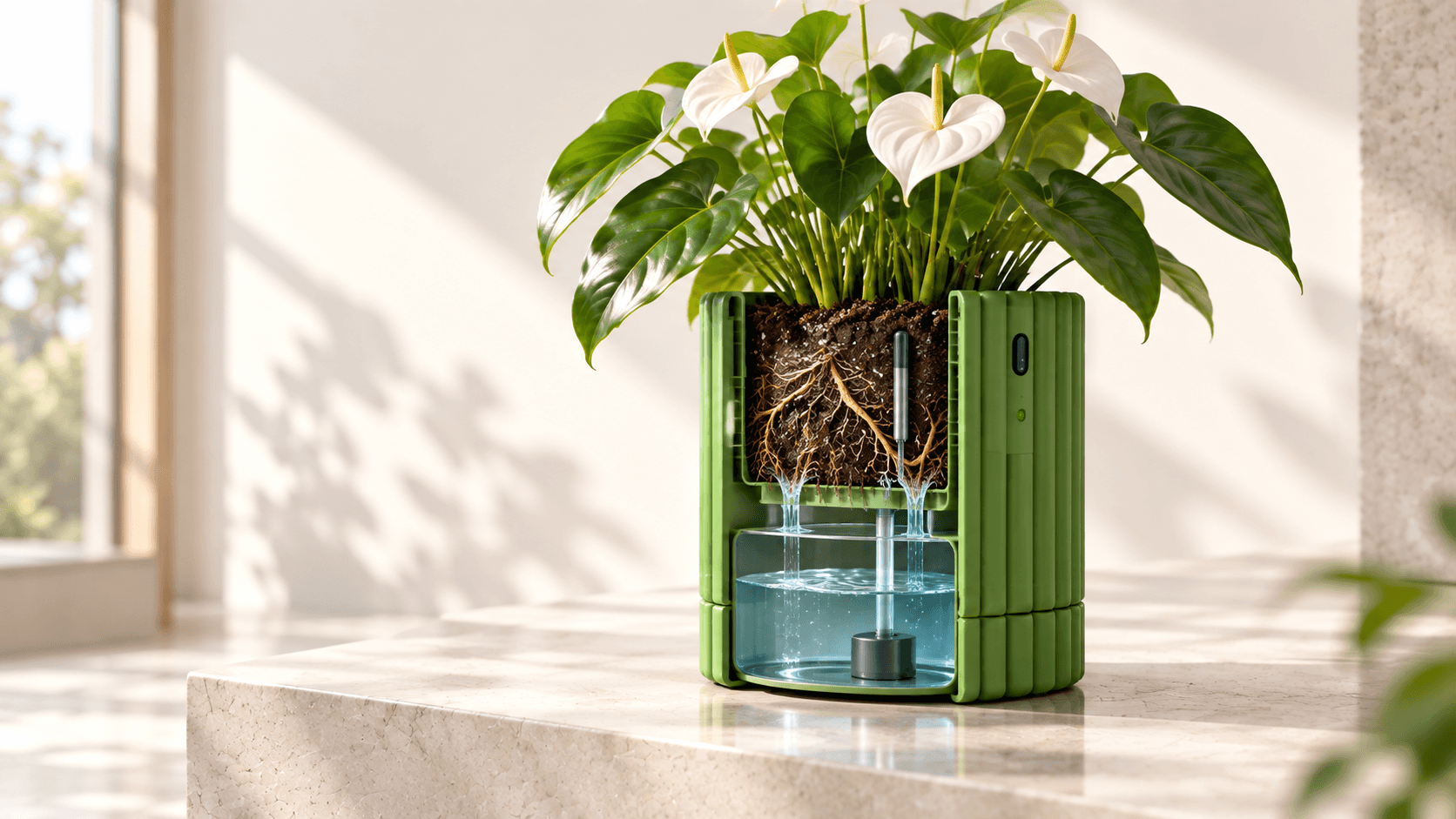
An automatic watering flower pot stores water and delivers it to the plant without requiring you to pour from a watering can every time the soil dries. The most capable versions do more than keep water nearby: they measure the root zone, compare the reading with a target for the selected plant and run a small pump only when watering is appropriate.
That distinction matters. “Self-watering” and “automatic watering” are often used as if they mean the same thing, but products can work in very different ways. A passive pot may draw water continuously through a wick. A timer system may release water every few days. A sensor-controlled planter waits for evidence from the soil. Understanding the mechanism helps you choose the right system—and use it safely.
The three main types of pots that water themselves
Passive reservoir pots
The simplest self-watering pot has an upper growing chamber and a lower reservoir. A wick, porous column or section of soil connects the two. Water rises through capillary action as the potting mix dries.
There is no pump, software or moisture reading. The system is quiet and simple, and it can work well when the plant, soil and wick are compatible. Its limitation is that water remains available continuously. A moisture-loving plant may appreciate that; a dry-adapted plant may not.
Timer-based watering pots
A timer-based auto watering pot uses a pump or valve to release water on a schedule. It may offer more control over volume than a passive wick, but the schedule is still an assumption. If a cloudy week slows water use, the next dose may arrive while the soil remains wet. If a heat wave speeds drying, the plant may wait too long.
Timers are useful when conditions are stable and the schedule has been tested. They are less responsive when indoor conditions change.
Sensor-controlled watering pots
A sensor-controlled automatic plant pot uses feedback. A probe checks the moisture level in the root zone. Software evaluates the reading using a plant profile and safety rules. If the soil is sufficiently dry and the system is ready, a pump moves a measured amount of water from the reservoir to the growing chamber.
This is a closed loop: measure, decide, deliver, then measure again. It is the approach used by Chlora One.
Inside a sensor-controlled watering cycle
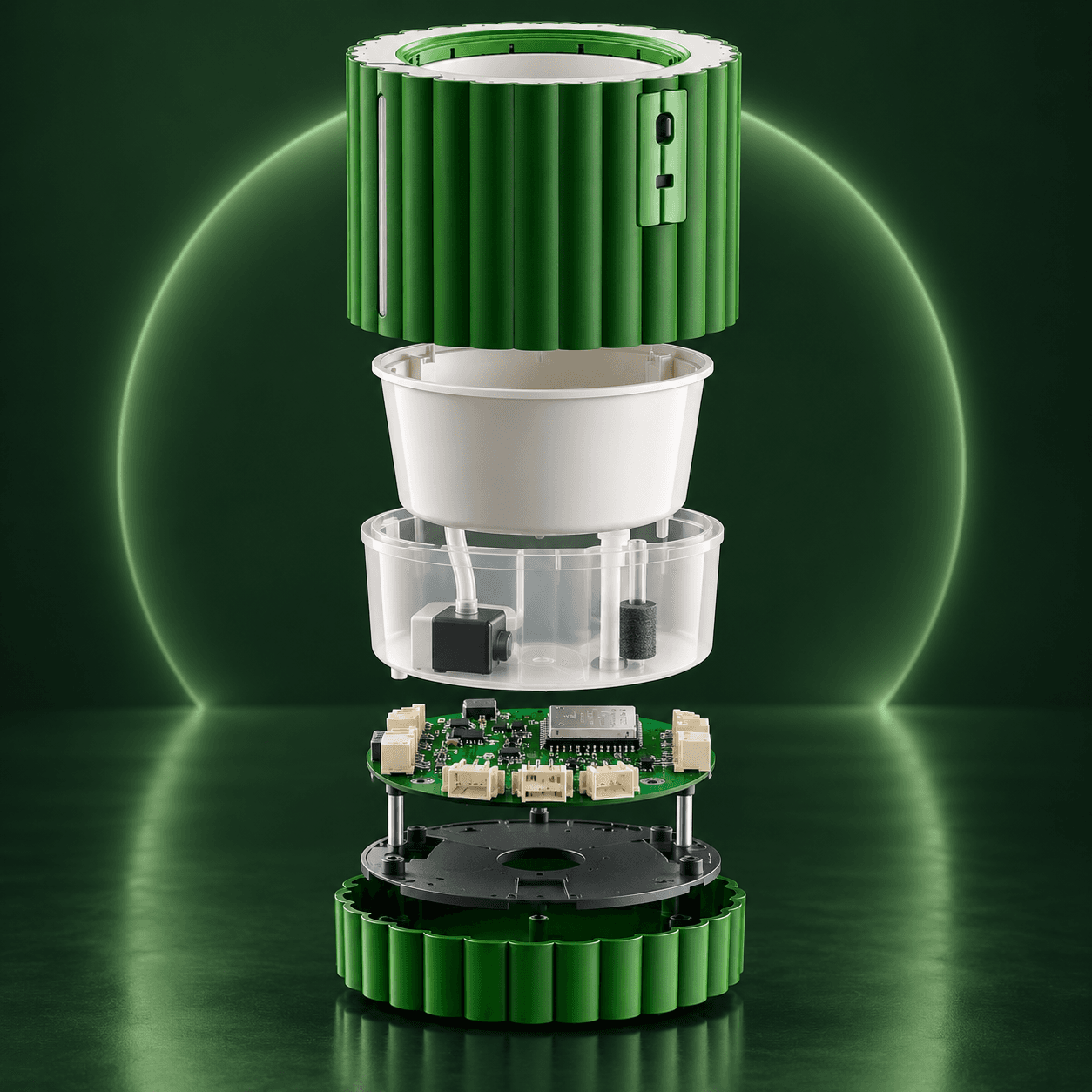
1. The reservoir holds a usable supply
The lower reservoir separates stored water from the soil. That keeps the pot visually tidy and reduces the need for an external bottle or tube. A level signal or low-water alert should tell you when a refill is needed.
Capacity is not the same as duration. A large, leafy plant in bright summer light may use water far faster than a small plant in winter. Treat any “days away” estimate as a starting point until you have observed your own plant.
2. The probe samples the root zone
The sensor checks moisture at a defined interval. Placement is important. A probe pressed against the pot wall, suspended in an air pocket or surrounded by unusually compact soil may not represent the rest of the root ball.
Good systems show when the last reading occurred. That timestamp helps distinguish “the soil is dry now” from “the last data arrived yesterday.”
3. The plant profile supplies the target
There is no single ideal moisture level for every houseplant. The software needs context: what plant is this, what range is intended and how much water should be delivered when the lower threshold is crossed?
In Chlora, selecting a plant profile sets the moisture and watering rules. The care system is being developed around more than 500 plant profiles, so an anthurium can be treated differently from a snake plant. The profile is the bridge between raw sensor data and a useful action.
4. Safety checks run before watering
Before a pump starts, the system should verify that watering is allowed. Typical checks include whether the reservoir contains water, whether a recent watering has already occurred and whether the reading is current. Conservative logic can also pause if data is missing or implausible.
This matters because repeated pumping is not a sensible response to every low reading. The reservoir might be empty. A probe might have lost contact. Water may have been delivered but not yet distributed evenly through the mix. Waiting for the next check can be safer than immediately adding more.
5. The pump delivers a measured dose
When the rules are satisfied, a small pump moves water into the soil. A measured dose is more controlled than leaving a continuous connection to a reservoir. The exact amount should suit the plant, pot and medium.
Chlora also provides manual watering choices for times when the owner intentionally wants to act: a light sip of about 100 ml, a standard watering of about 200 ml and a deep soak of about 500 ml. These are tools, not instructions to override the plant profile routinely.
6. The system checks the result
Water takes time to spread through potting mix. A sensible auto watering pot records the event, allows for absorption and checks again later. The owner should be able to see the last watering and the next planned check.
The history is valuable. If moisture barely changes after delivery, the soil may have become water-repellent, the probe may sit outside the wetting path, or the reservoir may be empty. If moisture remains high for a long time, drainage, low light, dense soil or root health may deserve attention.
Why a moisture threshold is better than a calendar
Most houseplants do not use water at a fixed rate. Day length changes. Heating and air conditioning change humidity. New growth increases leaf area. Roots fill the pot. A move of one metre can alter light and airflow.
Extension guidance from the University of Minnesota recommends letting the plant and soil guide watering rather than the calendar. A threshold-based system puts that principle into repeatable practice. It checks the condition first and waters second.
This does not mean the lowest possible moisture number should trigger an immediate flood. A good target range reflects the plant’s preference and allows appropriate air in the root zone. The goal is not permanent wetness. It is a controlled cycle within a suitable band.
What the sensors do—and do not—know
Moisture data is useful, but it is not a complete diagnosis. Wilting can occur when soil is too dry, yet plants with damaged roots can also wilt in wet soil because those roots cannot function properly. Yellow leaves may relate to watering, light, nutrition, normal aging or stress from a recent move.
Light, temperature and humidity data can add context, but no sensor can see every factor. Potting mix composition, drainage holes, root density and plant health still need human inspection.
Use the app as evidence, not as a replacement for looking at the plant. The strongest workflow combines consistent measurements with occasional physical checks.
Setting up an automatic watering flower pot
Choose an appropriate plant and mix
Start with a plant that fits the pot and has compatible moisture needs. Use a clean, well-draining indoor potting mix rather than dense garden soil. Avoid packing the mix tightly around the probe.
Position the sensor carefully
Follow the manufacturer’s depth and location instructions. The probe should make stable contact with the root-zone medium without pressing directly against thick roots or the pot wall.
Select the correct plant profile
Species matters, but so do real conditions. Confirm that the plant identification is correct and review any adjustable settings. If you are uncertain, begin conservatively and watch the drying pattern before relying on automatic care.
Fill, connect and observe
Fill the reservoir with clean water, connect the device as directed and confirm that readings update. Chlora One uses 2.4 GHz Wi-Fi for connected features. Keep the pot within dependable coverage and enable the alerts you actually want to receive.
Run a supervised trial
Do not make your first automated cycle the night before a three-week holiday. Watch several watering and drying cycles while you are home. Confirm that the pump delivers water, the moisture trend responds, the reservoir alert works and the plant remains comfortable.
Common mistakes
- Treating the percentage as universal. Moisture numbers depend on the sensor and medium. Follow trends and system guidance.
- Using dense or compacted soil. Poor structure can stay wet around roots even when the surface looks dry.
- Refilling without cleaning. Reservoirs and water paths need the maintenance specified by the manufacturer.
- Ignoring light. A plant in very low light may use water slowly, even with perfect automation.
- Overriding the system repeatedly. Manual watering on top of automatic watering can defeat the safeguards.
- Assuming connected means infallible. Check timestamps, alerts and the plant itself.
Is automatic watering safe for every plant
Not automatically. Plants that prefer reasonably even moisture—such as peace lilies, many ferns, fittonias, anthuriums and some tropical foliage plants—can be intuitive matches when their other needs are met.
Cacti, succulents, snake plants, ZZ plants and other dry-tolerant species need a pronounced drying period and highly draining soil. They may still work in a carefully configured sensor system, but they are poor candidates for a continuously wet wick arrangement or aggressive watering rules.
The plant profile, medium and water-delivery method must work together. “Automatic” describes the action, not whether the action is horticulturally correct.
Maintenance still matters
An automatic watering flower pot reduces routine guesswork; it does not become maintenance-free. Keep the reservoir filled, clean it as directed, inspect the water path, update software when appropriate and look at roots and soil during repotting. If mineral deposits accumulate, follow the product’s cleaning guidance rather than adding household chemicals casually.
Check that the device is online before travel. Review notifications for low water, dry soil or an offline pot. Chlora is designed to surface watering, soil, light, reservoir and connectivity information in the app so the next action is clear.
A calm form of automation
The best pot that waters itself should not water simply because it can. It should wait for current evidence, use rules that fit the plant, deliver a controlled amount and show what happened.
That is the difference between a gadget and a care system. Chlora One brings the reservoir, pump, soil sensing and app into one sculptural planter. There is no separate “automatic watering” switch to babysit: the chosen plant profile defines the behavior, and the pot checks the soil on its schedule. Your essential job is to choose the right profile, keep water available and respond when the system asks for attention.
Chlora is currently building toward Kickstarter. Join the launch list to follow product updates and see how autonomous care is taking shape.
Frequently asked questions
Will an automatic watering pot overwater my plant
Any system can be used incorrectly. Sensor-controlled watering can reduce schedule-based overwatering, but correct plant settings, probe contact, soil structure and drainage remain important. A passive wick may keep soil wetter than a dry-loving plant prefers.
Can I leave an automatic pot unattended
Only after testing it under normal conditions. Confirm several successful cycles, fill the reservoir, check connectivity and account for seasonal changes. For long absences, arrange a trusted person to inspect the plant and refill if necessary.
Does the pump run all the time
No. In a sensor-controlled design, the pump runs briefly when watering conditions and safety rules are satisfied. The pot spends most of its time monitoring or idle.
What happens if Wi-Fi goes down
Behavior varies by product. Review which decisions occur locally and which app features require a connection. The system should make offline status clear so you know whether recent data is available.
Can I water manually as well
Many systems allow manual watering. Use it thoughtfully and avoid adding water without checking recent automated events. Chlora’s manual options offer different measured volumes for intentional intervention.
Sources and further reading
- University of Minnesota Extension, Spring houseplant care: https://extension.umn.edu/garden-and-home/yard-and-garden/gardening-in-minnesota/houseplants/spring-houseplant-care
- Royal Horticultural Society, How to water containers: https://www.rhs.org.uk/container-gardening/how-to-water-containers
- University of Georgia Extension, Overwatering can lead to problems: https://site.extension.uga.edu/fultonag/2020/06/overwatering-can-lead-to-problems/
- Chlora One user manual and product source material